
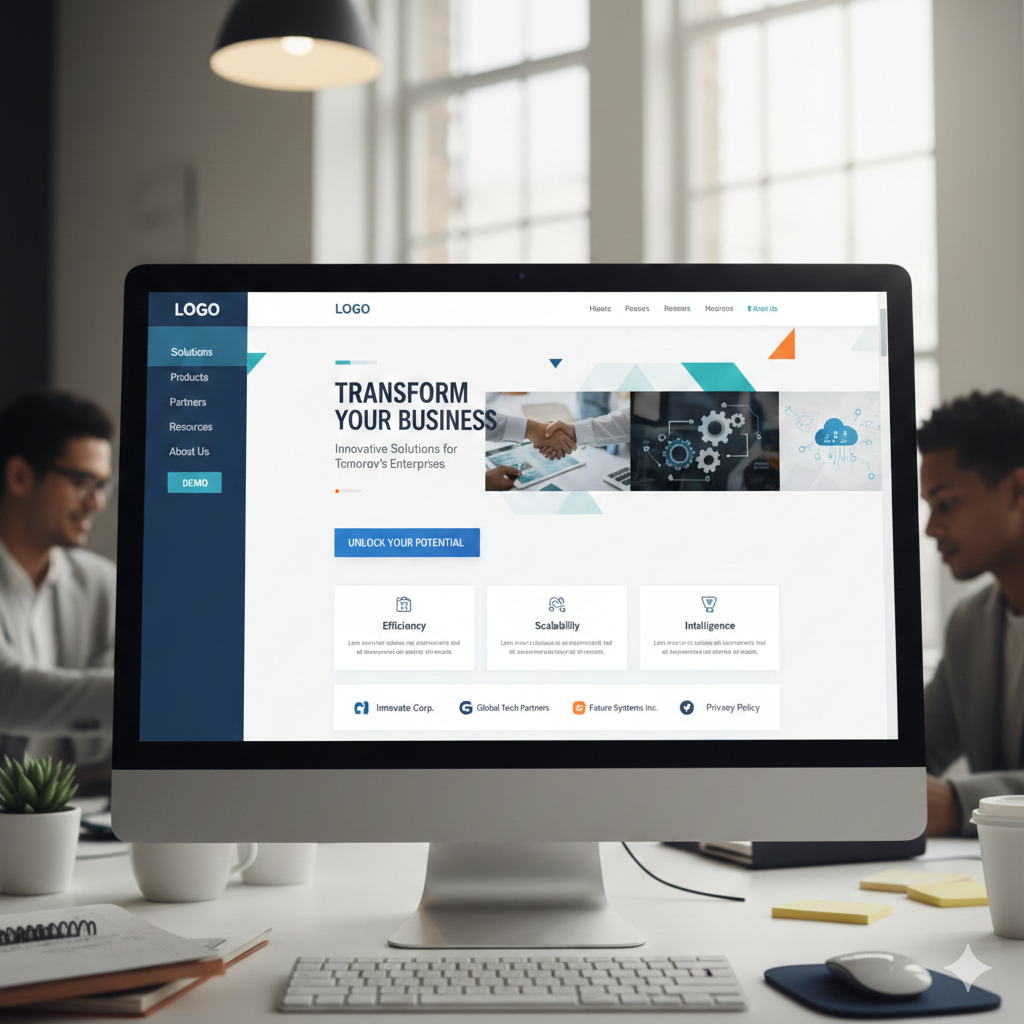
A B2B website redesign should be a growth catalyst—but for many companies, it becomes a costly disappointment.
A widely shared LinkedIn article highlights a sobering reality: up to 90% of redesign projects for B2B companies fail to deliver meaningful results within 18 months. That means months of planning, thousands of dollars in investment, and countless internal meetings often lead to little or no improvement in leads, conversions, or revenue.
So why does this happen? And more importantly, how can your B2B website redesign land in the successful 10% instead of becoming another statistic?

Why Most Website Redesign Projects for B2B Companies Fail
The core issue isn’t poor design—it’s misplaced priorities.
Many B2B organizations approach a website overhaul as a visual refresh rather than a strategic initiative. They chase modern layouts, trendy animations, and sleek aesthetics without asking a more important question:
How will this website help us generate leads, support sales, and grow revenue?
Here are the most common reasons redesign initiatives in B2B environments fail.
1. Design Over Strategy
A visually impressive site means nothing if it doesn’t support business goals. In many failed redesign projects, aesthetics take priority over clarity, usability, and conversion strategy.
A B2B audience isn’t browsing for entertainment—they’re evaluating solutions, comparing vendors, and looking for proof. If the design distracts from that process, performance suffers.
2. Ignoring the B2B Buyer Journey
B2B buying cycles are complex and rarely linear. Decision-makers, influencers, and stakeholders all interact with the site at different stages.
A successful redesign for a B2B company accounts for:
- Awareness-stage education
- Consideration-stage comparison
- Decision-stage validation
When content and navigation aren’t mapped to this journey, users get lost—and leave.
3. Weak Lead Generation and Conversion Paths
Many redesigned B2B sites look great but fail to convert because:
- Calls-to-action are unclear or buried
- Forms are too long or poorly placed
- Value propositions are vague
- Pages don’t address buyer objections
Without intentional conversion design, traffic gains won’t translate into pipeline growth.
4. Poor Sales Enablement Integration
In high-performing B2B organizations, the website supports the sales team—not just marketing.
Unsuccessful redesigns often overlook:
- Case studies and proof points
- Industry-specific landing pages
- Gated assets for lead qualification
- Easy access to product or service details
A strategic site overhaul should shorten sales cycles, not slow them down.
5. Decisions Based on Opinions Instead of Data
When redesign decisions are driven by internal preferences rather than analytics and research, results suffer.
Top-performing B2B teams rely on:
- Traffic and conversion data
- Heatmaps and session recordings
- User feedback
- Competitive analysis
Design trends fade—data-driven insights endure.
How the Top 10% Win With Strategic Website Redesigns
The B2B companies that succeed treat their website as a revenue-generating asset, not a branding exercise.
Here’s what they do differently.
1. Define Clear, Measurable Business Goals
Every successful B2B website redesign starts with goals tied to outcomes such as:
- Increasing qualified leads
- Improving conversion rates
- Supporting account-based marketing
- Enhancing brand authority
Design, content, and structure are aligned to these objectives.
2. Build Around the User Journey
Top-performing B2B websites guide users smoothly from first visit to conversion.
This includes:
- Intuitive navigation
- Clear messaging by buyer stage
- Content that answers real questions
- Strong internal linking
When users find what they need quickly, trust—and conversions—follow.
3. Design for Sales Enablement
The most effective redesigns actively support sales teams by:
- Highlighting case studies and testimonials
- Providing industry-specific solutions
- Making demos or consultations easy to request
- Creating content sales teams can share
The site becomes an extension of the sales process.
4. Leverage Data at Every Stage
From pre-launch research to post-launch optimization, successful teams rely on data to guide decisions.
They track:
- Engagement metrics
- Conversion performance
- Funnel drop-off points
- SEO and organic visibility
This ensures the redesign continues improving long after launch.
5. Plan for Scalability and Growth
The top 10% don’t redesign every two years. They build flexible platforms that scale with:
- New services
- New markets
- Evolving buyer behavior
A future-proof B2B website redesign saves time, money, and momentum.
A B2B Website Redesign Is a Strategic Investment
A website overhaul doesn’t have to be a gamble.
When approached strategically, a B2B website redesign can:
- Improve lead quality
- Shorten sales cycles
- Strengthen brand credibility
- Drive measurable revenue growth
The difference between failure and success isn’t design quality—it’s strategic clarity.
Frequently Asked Questions About B2B Website Redesign
What is a B2B website redesign?
A B2B website redesign is the strategic overhaul of a business-to-business website to improve performance, user experience, lead generation, and alignment with sales and marketing goals.
Why do most redesign projects fail in B2B?
Most fail because they focus on visuals instead of strategy, ignore the buyer journey, lack clear conversion paths, and are not guided by data.
How long does a B2B website redesign take?
A typical project takes between 8 and 16 weeks, depending on scope, content needs, and technical complexity.
Can a B2B website redesign improve lead generation?
Yes. When built with conversion optimization, SEO, and user intent in mind, it can significantly increase qualified leads.
Should SEO be included in a B2B website redesign?
Absolutely. SEO should be integrated from the planning stage to protect rankings, improve visibility, and support long-term growth.
Ready to Be in the 10% That Wins?
A poorly planned redesign can stall growth—but a strategic, data-driven approach can transform your website into a powerful sales and marketing asset.
👉 Planning a redesign for your B2B business?
Get expert guidance to audit your current site, align it with real business goals, and build a high-performing website designed to convert.
Contact us today to turn your next redesign into a revenue-driving asset—not another failed statistic.