
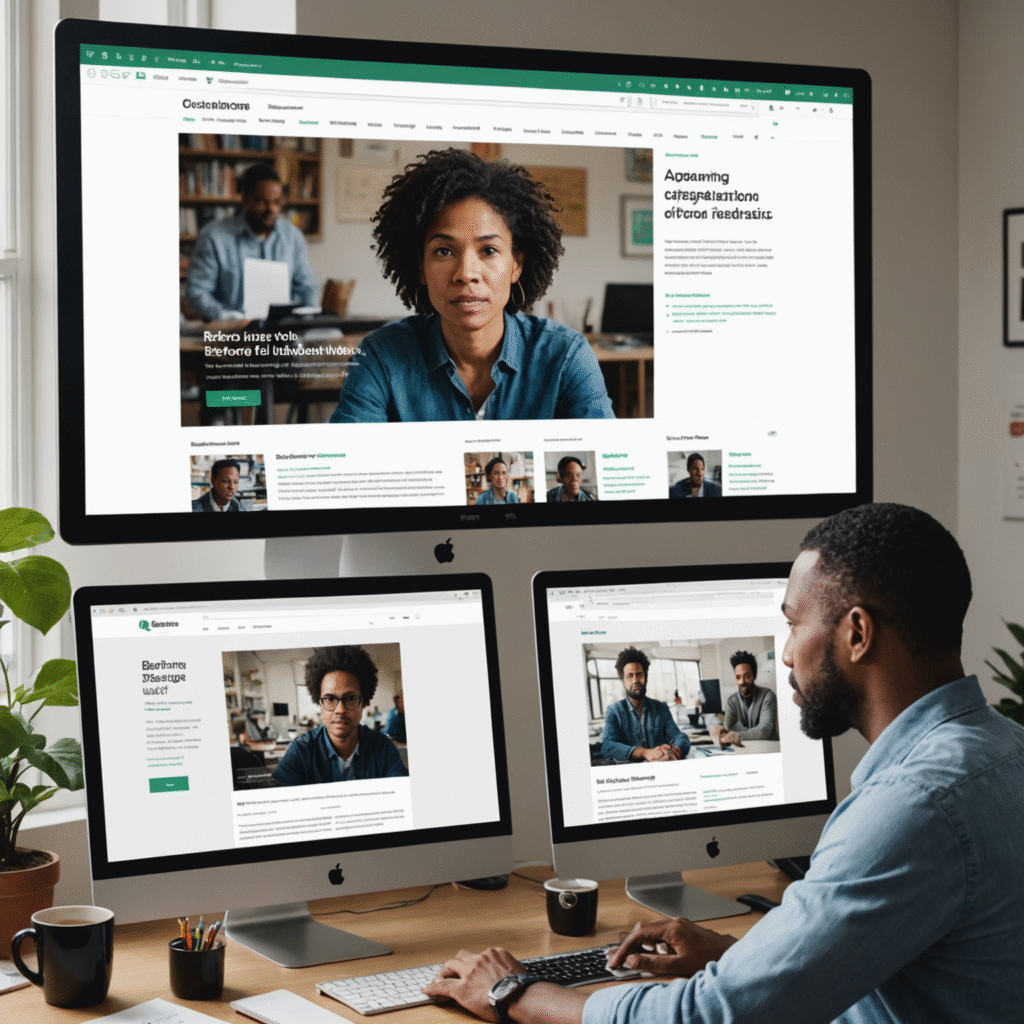
Have you ever landed on a website and instantly felt lost, frustrated, or disengaged? Chances are, it wasn’t just about the visuals. A truly effective website redesign goes far beyond aesthetics—it’s about delivering a seamless, intuitive user experience (UX) that helps visitors achieve their goals with ease.
In today’s competitive digital landscape, UX-focused website redesigns are essential for improving engagement, conversions, and trust.
Why UX Matters More Than Visual Design in a Website Redesign
A visually appealing website may catch attention, but UX design determines whether users stay, engage, and convert. UX focuses on how users think, behave, and interact with a website.
Key UX benefits include:
-
Reduced bounce rates
-
Clear navigation and content discoverability
-
Higher conversion rates
-
Improved accessibility and usability
A redesign without UX strategy is just a cosmetic upgrade—and often a missed opportunity.
UX Case Study: Redesigning a Non-Profit Website for Impact
Felicia Chan’s case study on redesigning a non-profit website highlights how research-driven UX design can transform digital experiences. Instead of applying a “fresh coat of paint,” the redesign re-evaluated the site’s structure, content, and user flows from the ground up.
A One-Week UX Sprint with Big Results
Despite the tight timeline, Chan followed a structured UX process that ensured every design decision was backed by insight rather than assumption.
UX Research Methods Used in the Redesign
Competitive Analysis
Analyzed similar non-profit websites to identify usability gaps, content opportunities, and industry best practices.
Content & Information Architecture (IA) Audit
Reviewed existing content to eliminate redundancy, clarify messaging, and reorganize information logically.
Sitemap Creation
Built a visual roadmap of pages and content hierarchy to support intuitive navigation.
Card Sorting
Engaged real users to understand how they naturally categorize information, improving menu structure and labels.
User Surveys
Collected direct feedback to uncover user pain points, motivations, and expectations.
Prototyping & Usability Testing
Created interactive prototypes to validate design decisions before development, saving time and cost.
Key UX Improvements in the Website Redesign
The redesign focused on clarity, simplicity, and actionability, particularly on the homepage.
Improved Visual Hierarchy
Clear headings, spacing, and calls-to-action guide users naturally through the page.
Simplified Navigation
Fewer menu items, clearer labels, and better structure reduce cognitive load.
Streamlined Homepage Content
Users can quickly find what matters most—donating, volunteering, or learning about the mission.
Why UX-Driven Website Redesigns Are Critical for Non-Profits
For non-profits, a website is more than an information hub—it’s a storytelling and conversion platform.
A UX-optimized redesign helps:
-
Increase donations
-
Boost volunteer sign-ups
-
Improve credibility and trust
-
Communicate mission and impact effectively
By prioritizing UX research and design, organizations can turn passive visitors into active supporters.
UX Website Redesign Best Practices
-
Start with user research, not visuals
-
Define clear user goals and journeys
-
Test early with prototypes
-
Optimize navigation and information architecture
-
Design for accessibility and inclusivity
-
Measure success with analytics and user feedback
Frequently Asked Questions (FAQ)
What is UX design in website redesign?
UX design focuses on improving how users interact with a website by enhancing usability, navigation, accessibility, and overall experience.
Why is UX important in a website redesign?
UX ensures that a redesigned website is not only visually appealing but also functional, intuitive, and conversion-focused.
How long does a UX website redesign take?
Timelines vary, but focused UX sprints—like Felicia Chan’s one-week process—can deliver meaningful insights quickly.
What UX research methods are most effective?
Common methods include user surveys, card sorting, usability testing, competitive analysis, and information architecture audits.
Can UX improve website conversions?
Yes. Clear navigation, strong visual hierarchy, and user-centric design directly impact engagement and conversion rates.
Ready to Start Your Website Redesign?
A successful website redesign isn’t just about a new look—it’s about creating a site that converts, ranks well in search engines, and delivers a better experience for your users.
If your current website feels outdated, slow, or no longer supports your business goals, now is the time to take action.
👉 Planning a website redesign?
Get expert guidance to evaluate your existing site, identify opportunities for improvement, and build a high-performing website designed for growth.
Contact us today to turn your website redesign into a powerful business asset—not just a visual update.